
Category: AccountancyManager (page 7 of 8)

Time tracking: 4 ways to get invaluable, practice-wide visibility

Being able to see what your team is working on when you’re all based at home (or when you’re back at the office) gives you a lot more than just ‘peace of mind’. 

Keep an eye on productivity, track profitability, identify bottlenecks, easily cover absences – and create instant invoices from work in progress.

This is the second in our spotlight series – taking a closer look at the features our customers are finding most helpful while working from home. Read the first – on sending bulk and segmented emails – here.

1. Keep track of who’s working – and on what

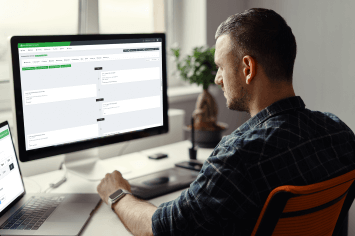
See who’s logged into AccountancyManager and what tasks they’re working on in real-time. 

Though time tracking has obvious benefits for management, it’s useful data for the team too.  We’ve found at AccountancyManager that working from home and juggling things like childcare has meant that our hours have changed a bit. Some of us are splitting our working days with partners for example. Time tracking helps to plan our own time better and make sure we’re spending it on the right things – and in the best way.

Recording your time is easy and soon becomes second nature. Often, your tasks will already be in AccountancyManager – automatically generated according to your clients’ accounting deadlines. 

2. Turn logged time into invoices – instantly

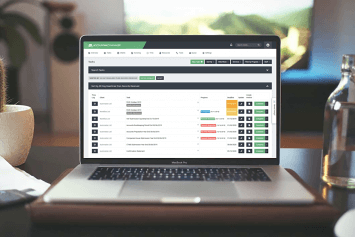
See the value of uninvoiced time in your work-in-progress (WIP) log – and generate invoices in a couple of clicks. You can send these invoices to your clients by email, share them through the client’s portal, or send them over to Xero through our integration. AccountancyManager can then chase for payment.  Continue reading...
Bulk emails: Keeping all your clients in the loop

There are a few reasons you might want to send a bulk email to all your clients at the moment:

  • To advise clients on Government support and how to apply
  • To update them on the latest relevant news
  • To provide answers to frequently asked questions 
  • To reassure them and show your support
  • To send a monthly update from your practice 

Keep your clients up to date with bulk emails

Get ahead of questions with regular updates

The situation is changing by the day for businesses of every size and type. Your clients will be full of questions about the Government’s measures to support businesses and the latest advice for freelancers and the self-employed.

Keep in touch with everyone – and reduce call volume

Get ahead of questions and show your continued support with regular update emails to your entire client base. Sounds time-consuming, but it doesn’t have to be. Simply choose your trusted sources for information (like your regulatory body, gov.uk, the World Health Organisation or the BBC) summarise the latest news in a few words and link through to the advice/story. 

One email to reach them all (or just some)

Create the update once and AM will send it to all your clients – at a time of your choice. Even better, you can tailor the updates to specific groups or types of clients such as industry, size, business/self-employed and loads more. Just pick the filter you want in your client list and tweak your emails to show the most relevant content. Done.

Send important documents 

A key addition – used by a lot of AM users – is the ability to attach documents to these bulk emails. James, AM co-founder, CEO and former practicing accountant, had this to say about the need for attachments.

“Although the portal is always there for sharing documents with your clients, it’s handy to attach things to bulk emails too – especially at the moment. You might want to send recent news, application forms or your practices’ own advice on the implications of the coronavirus.” Continue reading...

Part 3 – COVID-19: How to run your practice from home

In part 1, we looked at preparing your practice for remote working and recommended the best technology for building a virtual office in part 2. In this, our third installment, we focus on the impact of cloud-based practice management software across:

  • Onboarding and data entry
  • Automating client emails and texts
  • Storing and sharing files
  • Internal time management

Onboarding new clients

For any successful business, ‘business as usual’ usually means growth. There’s no reason why an entire practice working from home should impact that.

Home-working or not, onboarding new clients needs to be slick and efficient, as it’s the first experience your client will have working with you. But the process can be onerous and involve multiple people and systems across your practice. 

Anti-money-laundering (AML) checks 

Face-to-face meetings with new clients might have to be replaced with video calls, but there’s no excuse for skipping their AML checks. Thankfully you can manage the whole process online – without a sheet of paper in sight – through systems like AccountancyManager.

Video calling

64-8s, professional clearance and engagement letters 

The paperwork involved in onboarding rivals buying a house. The timescale certainly feels similar. With practice management software, creating and sending out these crucial documents becomes a couple-of-clicks process.

No longer will you have to;  Continue reading...

Part 2 – COVID-19: How to run your practice from home

Over the coming weeks, most office-based businesses will get their first taste of remote working ‘en masse’. And many will quickly realise that a table, chair and computer do not necessarily make an office. At AccountancyManager, we’re all working from home now – with some interesting new ‘colleagues’… 

Greetings from AccountancyManager's home offices

Working together, in the same place, is vital for the success of every business. It’s just ‘that place’ doesn’t have to be a physical location. A virtual office can work just as well, if not better. After all, it’s your team that makes your practice what it is, not the bricks and mortar that surrounds them.

Missed part 1? Read COVID-19: How to run your practice from home – Part 1 to see how best to prepare for remote working.

What does a virtual office look like? 

We’ve put together some suggestions for the kind of technology that will help you build a robust, efficient virtual office. Looking on the bright side, we’re lucky that there are so many apps and digital solutions out there to support us all over the foreseeable future. It’s also the perfect excuse to fast-track your digital working and paperless office plans. Using online communication tools, apps and cloud-based software that instantly removes the need for you all to be in the office. 

The adaptations you make to the way you work over the next few months could actually improve the performance of your team and your client relationships. When you all return to the office, the new habits you’ve formed and methods you’ve developed will continue to optimise the daily operations of your practice. Continue reading...

COVID-19: How to run your practice from home – Part 1

Up and down the country, millions of people (lucky enough to be able to work remotely) are creating makeshift home offices – dragging tables into corners and choosing the right chair. 

“Businesses and workplaces should encourage their employees to work at home, wherever possible.”

– UK Government, Guidance for employers and businesses on coronavirus (COVID-19), 18th March 2020

As you’ll already be aware, the latest coronavirus advice from the government is to stop non-essential contact with others. That includes avoiding the office if you’re able to work from home. In the next few days, the over 70s and those considered ‘high risk’ are expected to be advised to stay at home. For these people there’ll be no option but to work from home or not at all. There are around half a million over 70 still working in the UK and the ‘high risk’ group will be significantly higher. It does, however, seem like a matter of time before working from home becomes mandatory for all.

Woman working at kitchen table

For our recommendations on useful technology for remote working and to see a tortoise running our support desk (which is in no way a reflection of our excellent response times), see Part 2 – COVID-19: How to run your practice from home 

The Big 4 get ahead of the game

As soon as self isolation was first mentioned, companies around the world have been trialling or mandating remote working. On Friday, KPMG put their remote working capabilities to the test with around 11,000 people working from home. Also ahead of the game, Deloitte announced on Monday that all UK employees should work from home from Tuesday. Quick note – the London-based Deloitte employee that had a confirmed case of COVID-19 at the beginning of March has since been discharged from hospital and has made a full recovery. Ernst & Young and PwC had also allowed employees to work from home if they could. Continue reading...

Why – in 2020 – there’s no excuse for missing the self assessment deadline

We’ve all heard the ridiculous excuses given to HMRC for not hitting the self assessment filing deadline. But whatever the reasons, real or make believe, it generally comes down to leaving it to the last minute. 

“More than 700,000 people submitted their tax returns on deadline day. Some 26,562 people completed their returns in the final hour before the deadline. 

Source: BBC article, Jan 2020

It’s hard to say how many of the 958,296 that missed the deadline use accountants to file their self assessment tax returns – or do it themselves. Either way, almost 1 million people are clearly not thinking about it or acting early enough. With the current penalty of £100, that’s a total bill of £100,000,000 for simple tardiness. Let’s also spare a thought for the 11.1 million that did hit the deadline on time and the gruelling hours that went into those submissions.

Man on bed surrounded by work

Happily, things are changing – and fast. Januaries full of last minute panic and late nights are set to become a thing of the past. Not only due to HMRC’s MTD plans for self assessment, but thanks to the growing adoption of digital solutions by accountants and their clients.

“The Self Assessment experience is like Sisyphus and his eternal boulder pushing. Only that the boulder gets bigger and every year you seem to forget how to go about pushing it… Give me 5-minute annual accounts filing on Companies House any day.  Continue reading...

On the hot seat: Another Answer – Large Practice of the Year 2019

While winning our second Luca back in November was fantastic, seeing a customer recognised for their outstanding achievements was even better. We caught up with Sylvia Bourhill, Managing Director of Another Answer, to get her reaction to their win.

Sylvia Bourhill with Another Answer's second Luca

AccountancyManager: Congratulations on the Luca! How does it feel?

Sylvia Bourhill: Just wonderful. I wasn’t expecting it at all, it was a last minute decision to enter, but I’m so glad we did.

AM: Why do you think you won? 

SB: It’s a case of going deeper than just ‘our clients say great things about us’. Over the past few years we’ve been committed to developing four key areas – business growth, training, digital accounting and – as always – the success of our clients. Winning the Luca for Small Practice of the Year in 2015 and now winning 2019’s Large Practice of the Year means we’ve certainly achieved the business growth!

AM: What about the training, is that for staff or clients?

SB: Both. As well as a commitment to the development of Another Answer staff, I provide Quickbooks training to our clients – which crosses over with our focus on digital accounting. In terms of my personal growth, I recieve business coaching through ActionCOACH.  Continue reading...

6 steps to make self assessment easier on you and your clients

Has the self assessment deadline got you tearing your hair out? AccountancyManager can make it easier on both you and your clients, in six simple steps:

1. Ready-made self assessment checklists

Use the template self assessment form provided, make your own tweaks or build custom forms from scratch to collect the client data you need. Share your documents with clients through our secure, GDPR-compliant portal.

2. Automatically chase clients to complete forms

AccountancyManager will remind your client to complete their forms at regular intervals – as set by you. The forms are built in, so the system will know whether they’ve been completed or not and notify you and remind clients accordingly. 

3. Easy, fast client approval 

It couldn’t be easier for your clients to approve their self assessment. They simply log into their portal and e-sign the docs. You can track approvals and completed forms in your client timeline.

4. Plan your time around returned forms, records and approvals

You don’t need to keep track of which clients have responded; AccountancyManager will alert you. Confirm that you’ve received the required records, then filter your task list to easily see what submissions you can now complete.

5. Automatic tax payment reminders

Make sure your clients pay their tax on time by setting up automatic email and text reminders. They’ll appreciate the nudge and you don’t need to lift a finger.  Continue reading...

AccountancyManager’s 2019 – at a glance

It’s January. You’re crazy busy. We’ll cut to the chase.

 2019 saw lots of new features introduced to AccountancyManager, 10 new people join us and a few award ceremonies to boot. Now we’re looking forward to making 2020 our best year yet…

AccountancyManager's 2019 at a glance

Ease the pressure of busy season and beyond

AccountancyManager automates all your client-chasing and makes it easy to keep track of who’s returned what – and whose signatures you still need. (And that’s just the start.) Sign up for your free 30-day trial or an upcoming webinar on our website, or give us a call on 01926 355 366.

Now, back to panicking – there’s only a few days to go…

Combatting Money Laundering – Part 2

Dishing the Dirt

By: Alex Byrne – 22 January 2019

KEY POINTS

  • Tax practitioners should take care to ensure that clients are not tipped off about money laundering reports.
  • Understanding when a suspicious activity report should be made.
  • The difference between internal and external reports.
  • There are limited exemptions from making reports.
  • Advisers should take care not to risk their businesses by falling foul of the anti-money laundering legislation.

In the first part of this article (‘A dirty business’, Taxation, 29 November 2018), we considered the basic principles of the anti-money laundering (AML) regulations and recognising the circumstances that might indicate suspicious activity. In this issue we will consider ‘tipping off’, reports and exemptions.

Accountancy and tax practice staff must be properly trained on tipping off, which is covered in paragraph 6.1.20 of the CCAB’s Anti-Money Laundering Guidance for the Accountancy Sector. Similar paragraph references in this article refer to this guidance.

The offence of tipping off is committed when a relevant employee in the regulated sector discloses that a suspicious activity report (SAR) has been made and this disclosure is likely to prejudice any subsequent, current or contemplated investigation into allegations of money laundering or terrorist financing (MLTF).

There are some exceptions at paragraph 6.1.23 of the CCAB guidance.

  • A person does not commit an offence, for example, if they make a disclosure to a fellow employee of the same undertaking.
  • Nor is an offence committed if:
  • a relevant professional adviser makes a disclosure to another within the same profession (for example, accountancy) but from a different firm, who is of the same professional standing, when that disclosure relates to a single client or former client of both advisers and is made only to prevent a money laundering offence; and
  • is made to a person in an EU member state or a state imposing equivalent anti-money laundering requirements.
  • No disclosure offence is committed if an adviser attempts to dissuade their client from conduct amounting to an offence. And no offence is committed when enquiries are made of a client regarding something that properly falls within the normal scope of the engagement or relationship. This might be to understand a specific transaction or even, for example, to ask about an invoice that does not appear to have been included on a client’s tax return.
  • Individuals concerned about tipping off may wish to consult their money laundering reporting officer (MLRO). It is important that documents containing references to the subject matter of any AML report are not released to third parties without first consulting the officer.

The AML guidance advises that MLROs may seek advice from a suitably skilled and knowledgeable professional legal adviser or from the helplines and support services provided by the professional bodies (paragraph 6.1.29). A discussion with the National Crime Agency (NCA) and law enforcement may also be valuable, but the guidance warns that they cannot provide advice and are not entitled to dictate the conduct of a professional relationship. Continue reading...

Older posts Newer posts

©2017-25 AccountancyManager (AM) Ltd. All rights reserved.

Registered in England and Wales. No. 10658933.

Contact Us